Shape Decides the Sweet Spot, the Reach, and the Forgiveness
After face material and core, the paddle’s overall shape is the next most consequential design decision an OEM buyer makes. Shape determines three things the player feels on every shot: the size and location of the sweet spot, the reach at the net and baseline, and how forgiving the paddle is on off-center hits. Choose the wrong shape for your target segment and even a perfectly engineered face and core will feel “wrong” in play.
This guide breaks down the three dominant paddle shapes in 2026 — standard, widebody, and elongated — with exact dimensions, the physics behind each trade-off, the regulatory limits that constrain them, and clear OEM recommendations by market segment.
The Regulatory Box: 17 Inches and 24 Inches
Looking for a Pickleball Paddle OEM Factory?
Browse our carbon fiber and fiberglass pickleball paddle lines, or request a custom quote.
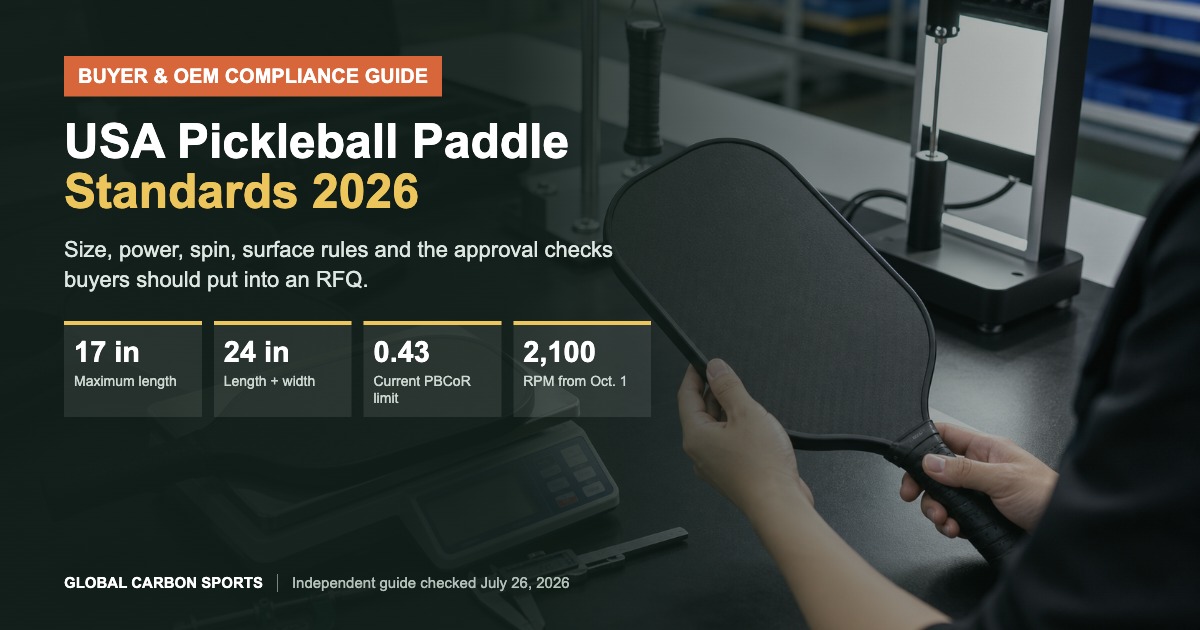
Every paddle shape must fit inside the limits set by USA Pickleball (and mirrored by most international bodies):
- Maximum length: 17 in (432 mm)
- Maximum combined length + width: 24 in (610 mm)
- No minimum size, but practical playability sets a floor around 15 in length and 7 in width
These two numbers create a fixed “budget” of dimensions. A wider paddle must be shorter; a longer paddle must be narrower. Every shape is a different allocation of this budget, and that allocation is exactly what produces the performance differences below.
The Three Dominant Shapes
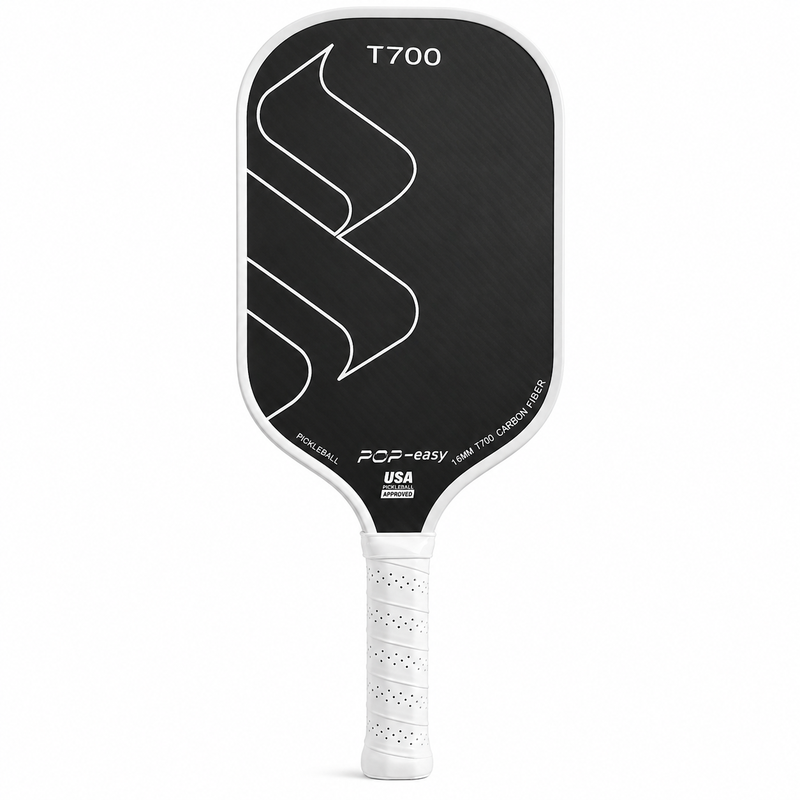
| Shape | Typical Width | Typical Length | Sweet Spot | Reach | Forgiveness |
|---|---|---|---|---|---|
| Widebody | 8.0–8.3 in | 15.0–15.5 in | Largest, centered | Shortest | Highest |
| Standard / Square | 7.5–7.8 in | 15.5–16.0 in | Large, balanced | Balanced | High |
| Elongated | 7.0–7.4 in | 16.0–16.5 in | Narrower, higher | Longest | Lowest |
Widebody: Maximum Forgiveness
The widebody shape pushes the width toward the 8+ in maximum, which forces the length down to around 15–15.5 in to respect the 24 in combined limit. The result is a broad, squat hitting surface.
- Largest sweet spot: The extra width spreads the responsive zone horizontally, so off-center hits to the left and right still feel solid.
- Most stable on blocks and volleys: The wide profile resists twisting in the hand when the ball strikes away from center.
- Shortest reach: The shorter length means slightly less extension at the net and on wide balls.
- Best for: Beginners, recreational players, doubles net players, and anyone who values consistency over reach.
Standard / Square: The Balanced Default
The standard shape splits the dimension budget roughly evenly, typically around 7.5–7.8 in wide by 15.5–16 in long. It is the most common shape on the market and the safest default for an OEM line targeting a broad audience.
- Balanced sweet spot and reach: Neither maximized, neither sacrificed.
- Versatile: Performs adequately at the net and the baseline, in singles and doubles.
- Easiest to market: The familiar proportion appeals to the widest range of players.
- Best for: Intermediate players, all-around lines, and OEM brands unsure of a single niche.
Elongated: Maximum Reach and Leverage
The elongated shape narrows the width to around 7–7.4 in and extends the length toward the 16–16.5 in range (and the face toward the 17 in length cap). The hitting surface becomes tall and narrow.
- Longest reach: Extra length helps on wide balls, overheads, and stretching volleys — a real advantage in singles and at the professional level.
- More leverage and power: The longer lever arm adds head speed on serves and drives.
- Higher sweet spot: The sweet spot sits higher on the face, which suits players who contact the ball above the center — but punishes low, off-center hits.
- Narrower forgiveness: The reduced width shrinks the horizontal sweet spot, so mis-hits to the sides feel less solid.
- Best for: Competitive players, singles specialists, baseline power players, and tennis converts used to a longer hitting surface.
The Physics: Why Width and Length Trade Off
The performance differences come from how mass and surface area are distributed:
- Sweet spot width tracks paddle width: A wider face gives a wider zone where the ball rebounds cleanly. Narrow faces concentrate the clean zone vertically but leave less horizontal margin.
- Reach tracks paddle length: Every extra inch of length is an extra inch of extension at full stretch — decisive on balls just out of normal range.
- Twist resistance tracks width: A wider head has a higher moment of inertia against horizontal twisting, so off-center hits twist the paddle less in the hand.
- Leverage tracks length: A longer paddle acts as a longer lever, increasing head speed and therefore power on full swings.
This is why no shape is universally best: maximizing one attribute (reach, leverage) inherently reduces another (forgiveness, sweet spot width) within the fixed 24 in budget.
How Shape Interacts with Weight, Balance, and Grip
Shape does not exist in isolation. It couples with the other specifications covered in our guides:
- Balance: Elongated paddles naturally place more mass toward the head, tending toward a head-heavy balance that adds power but reduces maneuverability. Widebody paddles tend more even or head-light. See our weight and balance guide.
- Handle length: Because total length is capped at 17 in, an elongated face often pairs with a shorter handle unless the design pushes to the limit. A widebody’s shorter face leaves room for a longer handle — relevant for two-handed backhands, as covered in our grip and handle guide.
- Surface and spin: Shape is independent of surface texture, but elongated competitive paddles are most often paired with raw carbon fiber faces for spin, as detailed in our surface texture guide.
OEM Specification Checklist
- Overall length and width: Specify both in inches or mm, ensuring length ≤ 17 in and length + width ≤ 24 in.
- Shape family: Widebody, standard, or elongated.
- Face length vs handle length split: Define how the 17 in length is divided.
- Corner radius: Rounded corners affect both aerodynamics and edge durability.
- Edge guard profile: Must follow the chosen shape; wider guards add durability but weight.
- Mold/tooling: Each shape needs its own mold — factor tooling cost into MOQ planning.
- Dimensional tolerance: ±1–2 mm on length and width for premium lines.
Market Positioning by Shape
| Segment | Recommended Shape | Why |
|---|---|---|
| Beginner / recreational | Widebody | Maximum forgiveness and sweet spot |
| Intermediate / all-around | Standard | Balanced, versatile, easy to market |
| Competitive doubles | Standard or widebody | Stability and sweet spot at the net |
| Competitive singles | Elongated | Reach and leverage from the baseline |
| Tennis convert | Elongated | Familiar longer hitting surface |
| Premium / pro | Elongated or standard | Performance-tuned to play style |
| Promotional | Standard or widebody | Universal appeal, forgiving |
Sourcing from Global Carbon Sports
Global Carbon Sports offers all three paddle shapes with full dimensional customization from our Guangzhou facility:
- Premium T700 Carbon Fiber Paddles — Available in standard, elongated, and widebody shapes with custom dimensions
- Wholesale T700 Carbon Fiber Paddles — Standard and elongated shapes
- Fiberglass Paddles — Widebody and standard shapes ideal for recreational and promotional lines
- Complementary pickleball balls and paddle accessories
Not sure which shape fits your market? Request a paddle shape consultation — tell us your target player and play style.
Frequently Asked Questions
Which paddle shape is best for beginners?
A widebody shape is generally best for beginners because its larger sweet spot and greater twist resistance make off-center hits more forgiving. As players improve and want more reach, they often move to a standard or elongated shape.
Does an elongated paddle really give more power?
Yes, through leverage. The longer lever arm increases head speed on full swings, adding power to serves and drives. The trade-off is a narrower sweet spot and less forgiveness on mis-hits, which is why elongated shapes suit more experienced players.
Can a paddle be both wide and long?
Not beyond the regulatory limit. USA Pickleball caps length at 17 in and length plus width at 24 in, so a wider paddle must be shorter and a longer paddle must be narrower. Every shape is a different allocation of this fixed budget.
How does shape affect the sweet spot location?
Widebody and standard shapes keep the sweet spot centered and broad. Elongated shapes raise the sweet spot higher on the face, which benefits players who contact above center but punishes low mis-hits. Width mainly controls the horizontal extent of the sweet spot.
Do I need a separate mold for each shape?
Yes. Each distinct shape requires its own mold or tooling, which affects upfront cost and minimum order quantity. Many OEM brands start with one shape (often standard) and add elongated or widebody SKUs as the line grows. We can advise on tooling strategy during your RFQ.