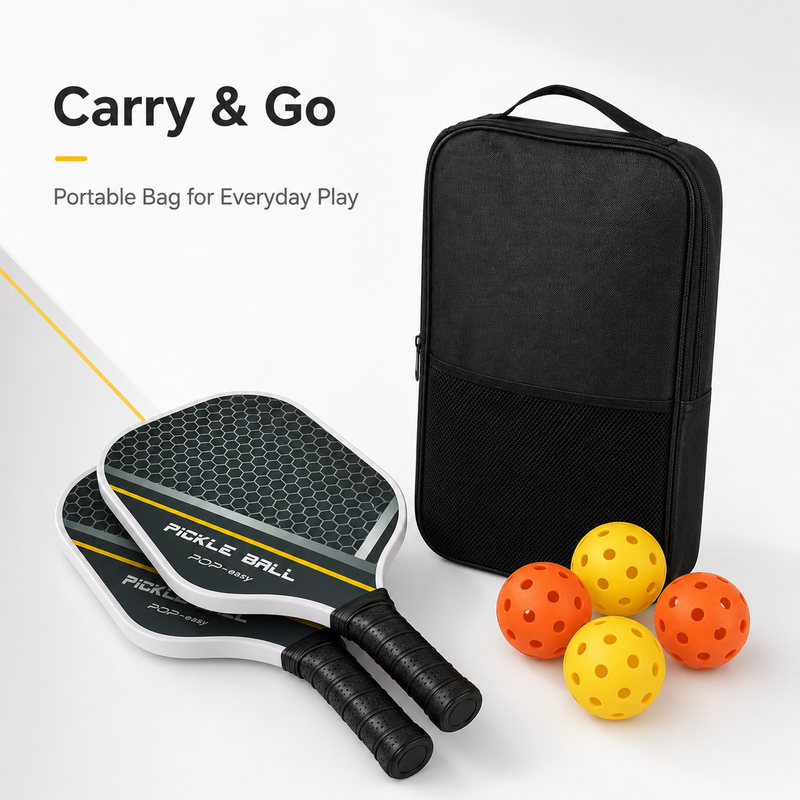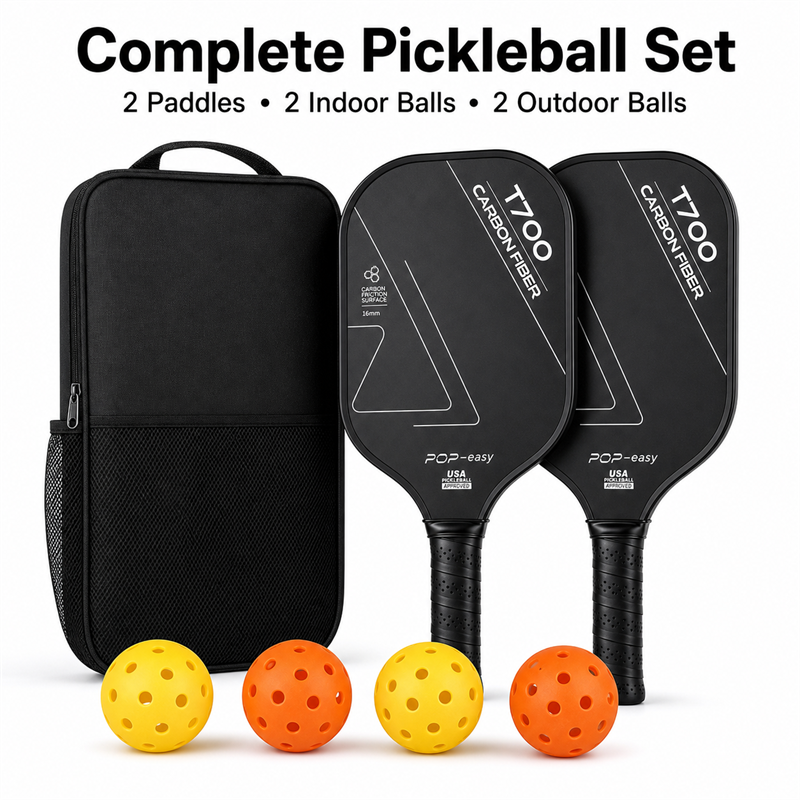
This guide explains how OEM pickleball paddle manufacturing works from a factory point of view. It is written for buyers who want to source carbon fiber, raw carbon, fiberglass, or thermoformed paddles from China and need a clear framework before requesting samples.
## What Does OEM Pickleball Paddle Manufacturing Mean?
OEM manufacturing means the factory produces paddles according to your requirements. You can choose existing molds for faster launch, or develop a custom specification when your brand needs a unique shape, weight range, face texture, handle length, core thickness, grip, edge guard, and packaging.
For most new brands, the smartest first step is not a fully custom mold. It is usually an existing proven mold with your logo, surface choice, packaging, and quality target. This lowers startup risk while you test price points and customer feedback.
## Main Paddle Materials
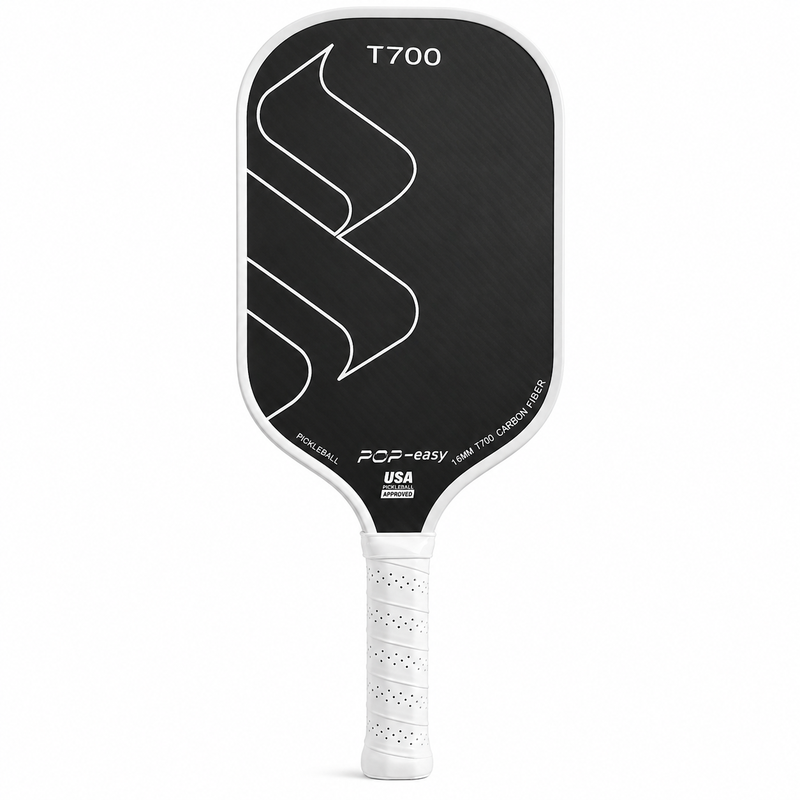
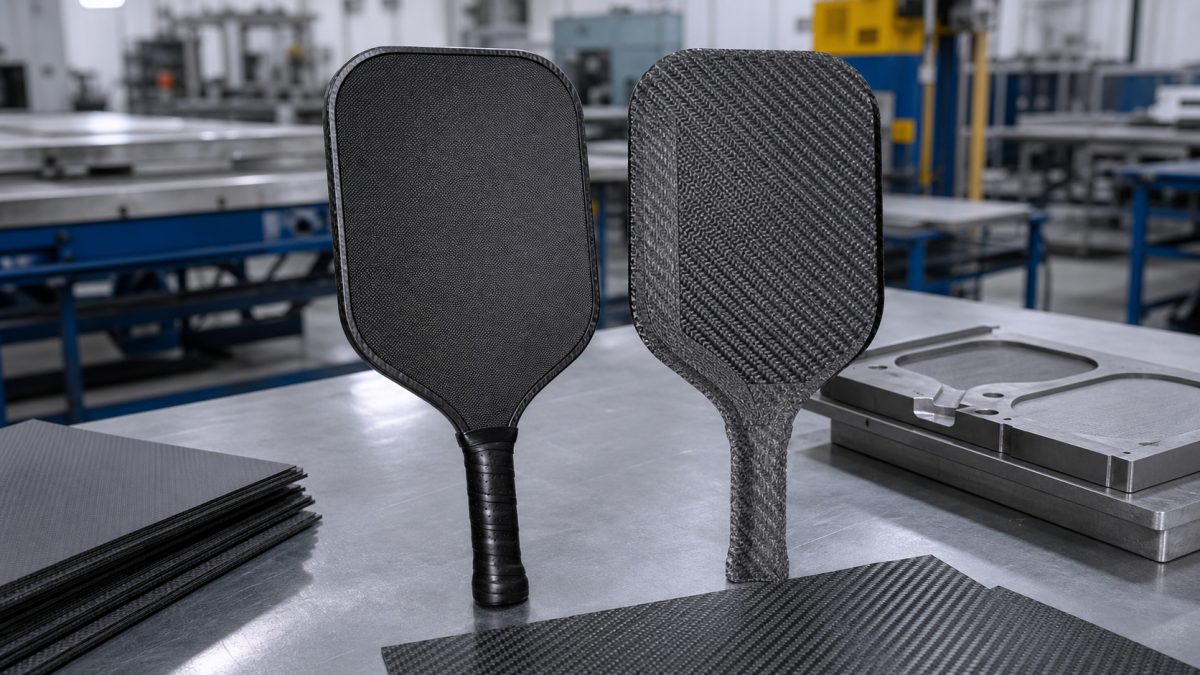
The most common surfaces are fiberglass, carbon composite, T700 raw carbon fiber, and higher modulus carbon fiber. Fiberglass is often used for value paddle sets because it provides a lively feel and accessible cost. Raw carbon fiber is popular for performance paddles because players like the controlled feel, spin potential, and premium appearance. For advanced programs, a brand may test multiple layup structures to balance power, control, and durability.
The core is usually a polymer honeycomb structure. Common thickness choices include 13mm, 14mm and 16mm. Thinner cores tend to feel faster and more powerful, while thicker cores often support control and a softer touch. The best option depends on the buyer’s target market: beginner set, club training, retail mid-range, or premium competitive paddle.
## Cold Pressed vs Thermoformed
Cold pressed construction is widely used for stable, cost-effective paddle production. Thermoformed construction uses heat and pressure to create a stronger unibody feel, often with more power and improved edge durability. Thermoformed paddles are attractive for premium private label products, but they need careful process control to prevent inconsistent weight, delamination, or dead spots.
## Typical OEM Development Process
- Requirement brief: target price, quantity, market, surface, core, weight, packaging, and logo files.
- Factory recommendation: suitable mold, material, construction, and sample plan.
- Artwork confirmation: logo placement, color, texture, edge guard, grip and packaging layout.
- Sample production: usually 7-15 days for standard programs.
- Testing and approval: weight, balance, bonding, surface, handle comfort, packaging and play feel.
- Bulk production: inspection during production and final QC before shipment.
## MOQ and Cost Factors
MOQ depends on material, artwork complexity, packaging, and whether the buyer uses an existing mold or requests a custom mold. Standard private label programs are usually easier to start than new mold projects. Main cost drivers include surface material, core thickness, thermoforming process, logo process, packaging type, inspection standard, and order quantity.
## Supplier Checklist for B2B Buyers
- Can the factory show similar paddle samples?
- Does it understand carbon fiber layup and honeycomb core bonding?
- Can it support logo, packaging, barcode, and carton requirements?
- Does it provide realistic sample and bulk lead times?
- Can it explain QC checks for weight, balance, surface, edge guard and bonding?
- Does it communicate clearly before payment, not only after order confirmation?
## Internal Links for Buyers
Browse our current pickleball paddle products (https://globalcarbonsports.com/category/pickleball), compare all carbon fiber sports products (https://globalcarbonsports.com/products), or learn more about our factory capability (https://globalcarbonsports.com/factory).
## Need a Pickleball Paddle OEM Quote?
Global Carbon Sports manufactures carbon fiber badminton rackets and pickleball paddles for brands, distributors, clubs, and retailers. For a fast quotation, share your target paddle type, surface material, core thickness, quantity, logo artwork, packaging needs, and target market on our contact page (https://globalcarbonsports.com/contact).
OEM Buyer RFQ Checklist
For a faster factory quotation, send your target market, estimated quantity, target price range, logo requirement, packaging style and sample deadline. A clear RFQ lets us recommend practical entry, mid-range or premium specifications instead of guessing from a product photo.
| RFQ Item | What to Confirm |
|---|---|
| Target market | Country, sales channel, club, retail, e-commerce or promotional order. |
| Product direction | Raw carbon, fiberglass, thermoformed, cold pressed, accessory bundle or badminton racket series. |
| Branding | Logo, surface graphics, grip color, cover, retail box, barcode and carton marks. |
| QC evidence | Weight tolerance, balance, surface finish, edge guard, grip alignment, packing check and sample approval. |
Next step: request an OEM quote, review our pickleball paddle products, or compare our carbon fiber racket and paddle catalog.
Pickleball Paddle OEM Technical Guides
Looking for a Pickleball Paddle OEM Factory?
Browse our carbon fiber and fiberglass pickleball paddle lines, or request a custom quote.
- T700 raw carbon paddle surfaces — material positioning and buyer checks.
- Thermoformed vs cold-pressed paddles — construction and product-line fit.
- Private-label paddle launch guide — design, packaging and MOQ.
- Pickleball paddle QC checklist — weight, bonding, surface and packaging.
- Pickleball paddle manufacturing process — raw materials, core, layup and factory QC.
- Paddle warranty QC and defect guide — delamination, core crush and batch records.