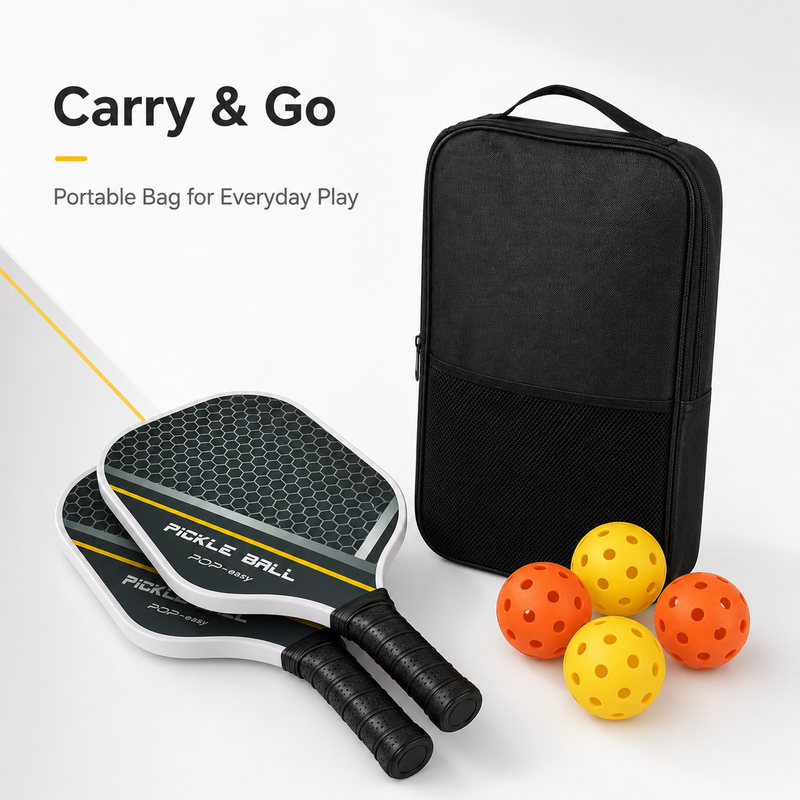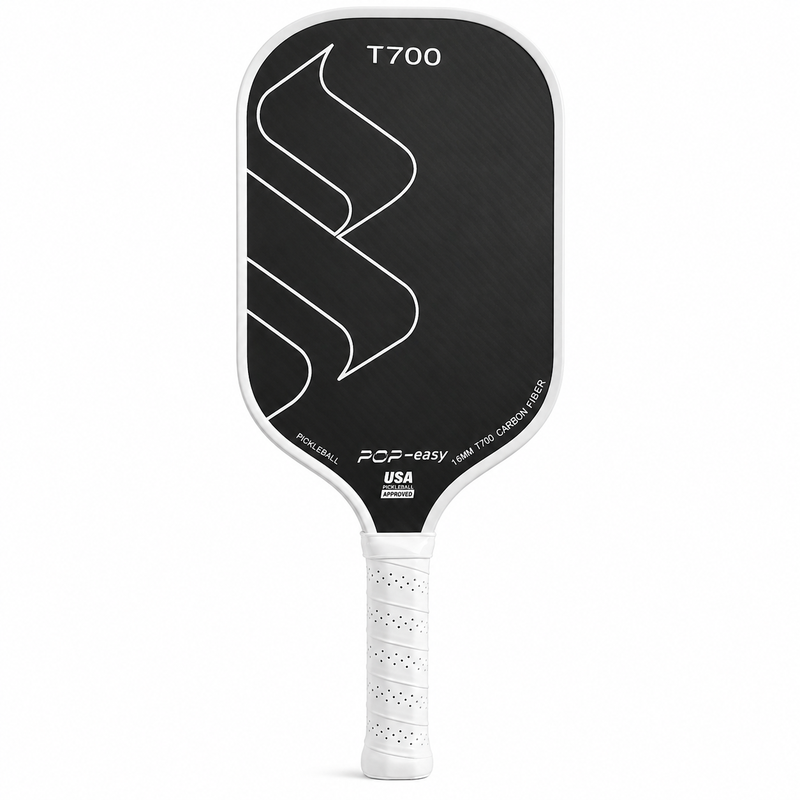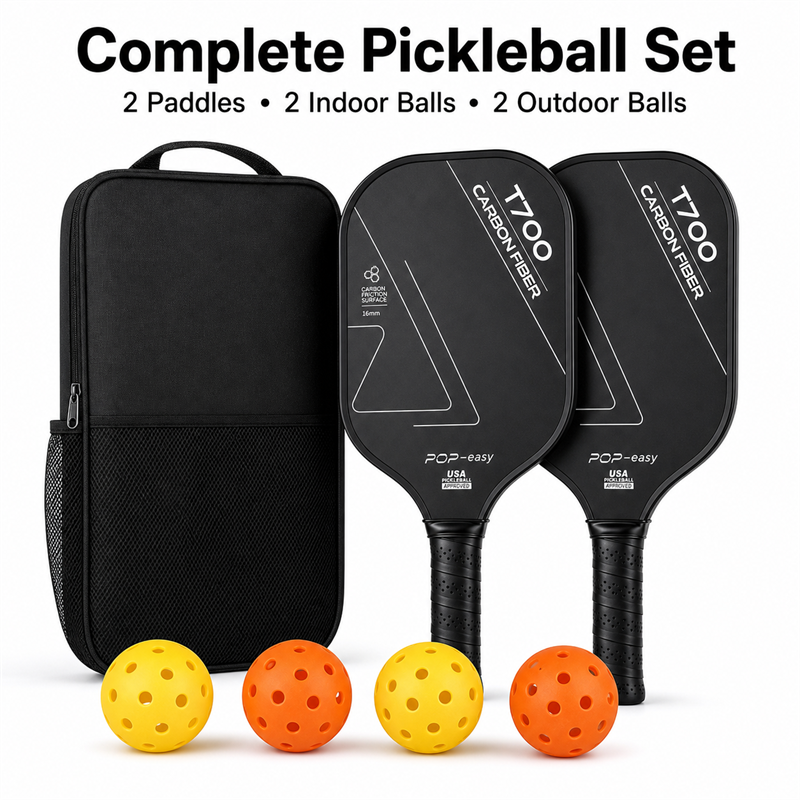
Short answer: a pickleball paddle is a thin, solid-faced paddle around a polymer honeycomb core; a padel racket is a much thicker foam-core racket with a perforated face; a beach tennis paddle sits between them - foam core, perforated face, thinner and lighter than padel. They are not interchangeable products, and each one changes the tooling, materials and testing in your OEM brief.
The three constructions at a glance
| Aspect | Pickleball paddle | Padel racket | Beach tennis paddle |
|---|---|---|---|
| Face | Solid, uninterrupted surface (raw carbon, carbon composite or fiberglass) | Perforated carbon or fiberglass face with drilled holes | Perforated face, usually carbon or fiberglass |
| Core | Polymer honeycomb is the mainstream choice | EVA foam core (soft to hard grades) | EVA foam core |
| Profile | Thin (commonly 13-16mm) | Thickest of the three | Between the two |
| Feel drivers | Core thickness, face lay-up, surface texture for spin | Foam hardness, hole pattern, balance point | Foam grade, weight and balance for fast net play |
| Common approvals | USA Pickleball equipment standards for sanctioned play | Federation requirements vary by market and event | ITF-related requirements for sanctioned events |
What this means for your OEM brief
1. Tooling and molds are sport-specific
A factory cannot press a padel racket in pickleball tooling. Shape, profile depth and hole drilling all require their own molds and fixtures, which is why "can you also make padel?" is a real capability question to ask any supplier - not an assumption. Our factory runs paddle production across these categories; each project is confirmed with its own sample before bulk production.
2. Materials shift with the sport
Raw carbon surface texture matters most in pickleball for spin. In padel, foam hardness and balance define the play feel, and face perforation is part of the structure. In beach tennis, weight and swing speed dominate. The same "carbon fiber" label leads to very different lay-ups and cost structures in each sport.
3. Certification budgets differ
If your pickleball line targets sanctioned play in the US, plan for USA Pickleball testing per model. Padel and beach tennis approvals depend on the market and event level you target - clarify this before finalizing specs, because it affects surface treatments and dimensions.
4. One factory relationship can cover a multi-sport line
For distributors and emerging brands, the practical route is one supplier that handles shape development, surface graphics, grips and packaging across sports with per-model sample approval. It keeps QC standards, communication and shipping consolidated.
Where to start for each sport
- Pickleball brand or private label: see our private label pickleball paddle factory page - logo, packaging and 100-pc test orders.
- Padel line development: see our padel racket manufacturer page - shape, face and core development with sample approval.
- Beach tennis programs: see our beach tennis paddle manufacturer page.
FAQ
Q: Can one brand launch pickleball and padel at the same time?
A: Yes - it is common for emerging brands in markets where both sports grow together. Each product line needs its own molds, samples and approval cycle; a combined program mainly saves on communication, QC standards and consolidated shipping.
Q: What is a realistic starting quantity?
A: Our standard-model programs start around 100 pcs per model, which is how most new brands run a first market test before scaling.
Q: How do I know a factory really makes these products?
A: Ask for the customization process on video, sample approval flow and batch QC records - and confirm every claim against an approved physical sample before bulk payment.